


At a recent Circles Journey Groups gathering, we spent a couple of hours trying out AI together. What surprised me was how differently each person imagined using it. That got me wondering about one use in particular. Could AI help us think through a conversation we never got to have?
You may have heard of writing a letter you never intend to send. Writing an unsent letter with ChatGPT gives you a way to reflect on what you most wanted the other person to understand.
The response is imagined, but what you notice about yourself can be real. You might start out thinking you wanted an apology and discover that what you most wanted to hear was, “You shouldn’t have had to keep explaining why it hurt.” That’s a moment of what we call Good Noticing in Circles. You heard something in your own words that you hadn’t heard before.
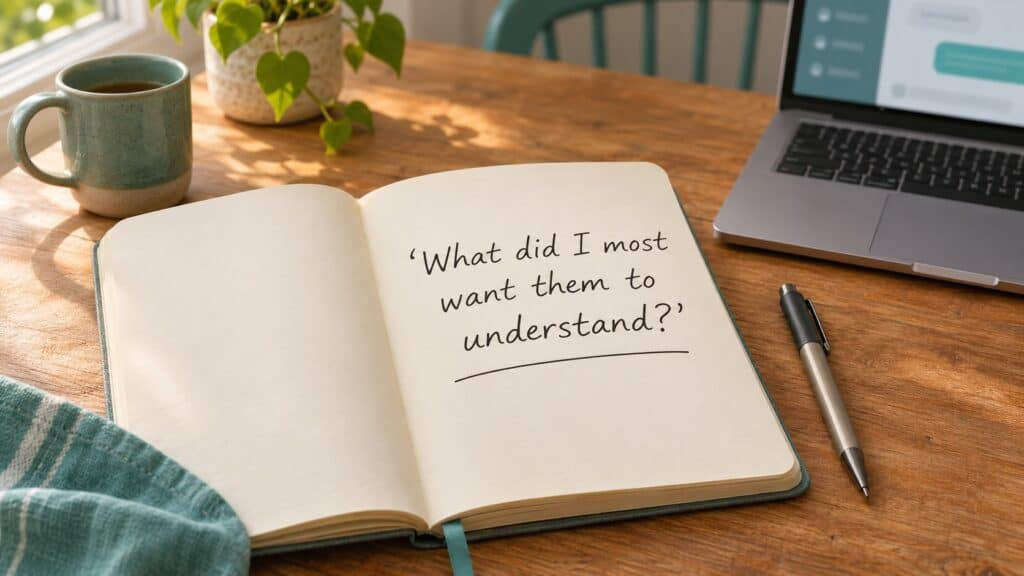
Start by asking ChatGPT to be a thoughtful witness. Then, if you want a dialogue, choose the role based on what you’re trying to understand.
| If I want to… | I’d ask ChatGPT to… |
|---|---|
| Hear myself more clearly | Listen first. Then reflect what I’m saying, using my own words where possible, and ask one question at a time. |
| Experience being heard | Play an imagined version of the person who can listen and take responsibility. Then help me notice which part of their response mattered most to me. |
| Find my words when they get defensive | Rehearse a short exchange using one behavior I’ve described, such as changing the subject. Pause after each reply so I can decide what I want to say or whether I want to end the conversation. |
| Explore what I’m still trying to understand | Ask careful, open questions. Help me sort out what I remember, what I felt, what I inferred, and what I may never know. |
I’d use that last role in place of asking Chat to “be my therapist.” It gives Chat a clear job and leaves you in charge of the meaning. I’d also save the realistic reenactment for a specific purpose, like practicing how to end a conversation when someone starts arguing about what happened. You can do a lot with the witness and imagined listener roles alone.
An imagined reply can help you name what you needed to hear. What the real person thinks remains unknown.
Here’s how I’d start it in ChatGPT.
I want to write an unsent letter to someone about an experience I’m still thinking through. Let me write in pieces and wait until I say “I’m finished” before offering feedback.
Then tell me what you heard in my own words, especially what I most wanted this person to understand. Offer your observations as possibilities I can correct. Ask one gentle question and wait for my answer.
If I ask for a dialogue, first ask me which would help more right now: an imagined conversation where I’m finally heard, or a short rehearsal where I practice what I’d say if they respond the way I remember. Keep any role-play clearly labeled as imagined. If I say “pause,” drop the role immediately.
When we finish, ask me what I understand more clearly now and what I’d like to leave for another day.